

Health Communication Examples
Health Communication Portfolio
-
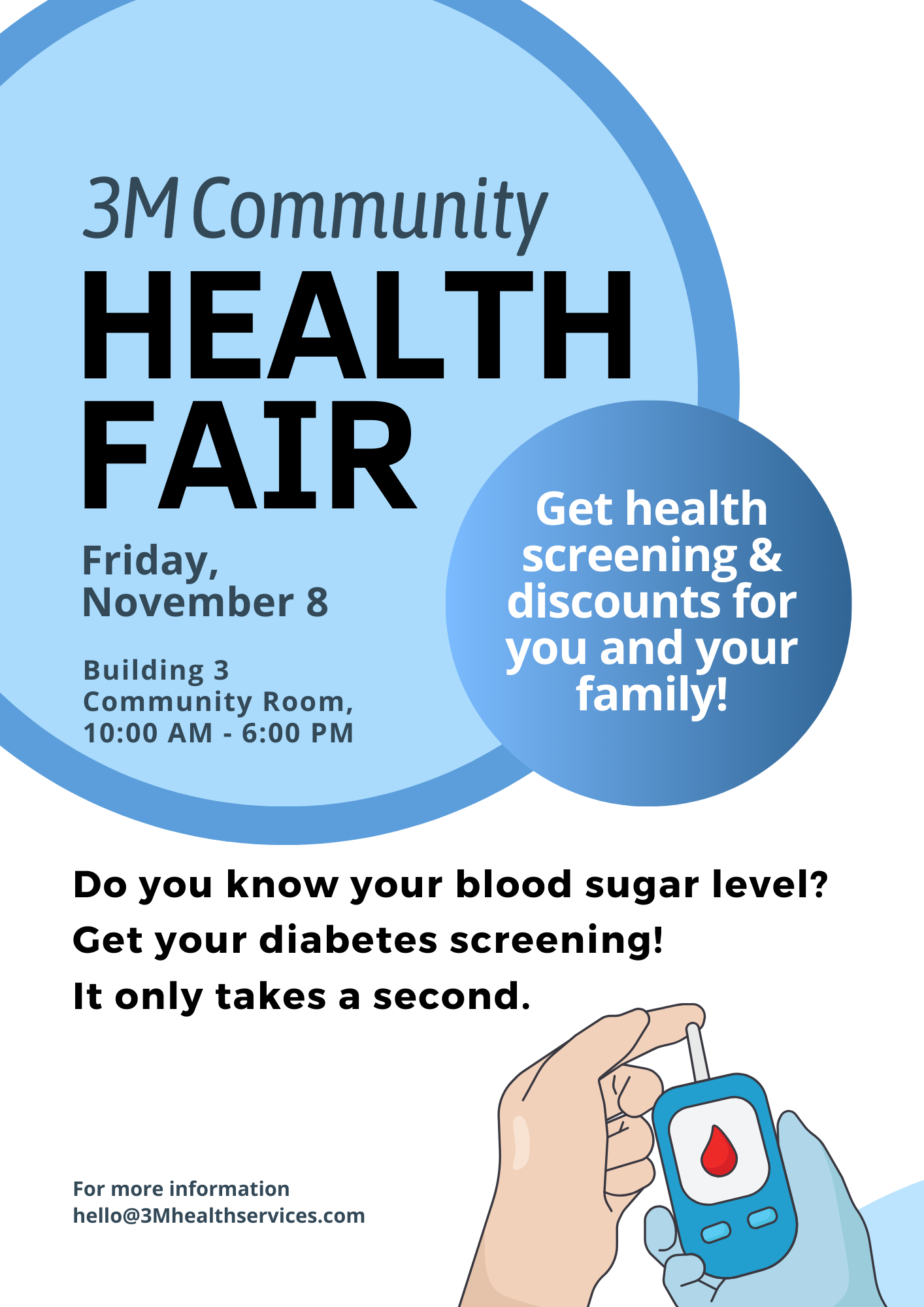
Worksite Health Intervention
This worksite health intervention was created to increase easy diabetes screenings within the 3M corporate campus in Maplewood. MN. For people who tested with higher blood sugar levels on initial screenings, educational programs, and reductions on future healthcare premiums would be offered as an incentive to participate. These steps would improve employee health, reduce absenteeism and in the long run, improve employee retention and company profitability.
-
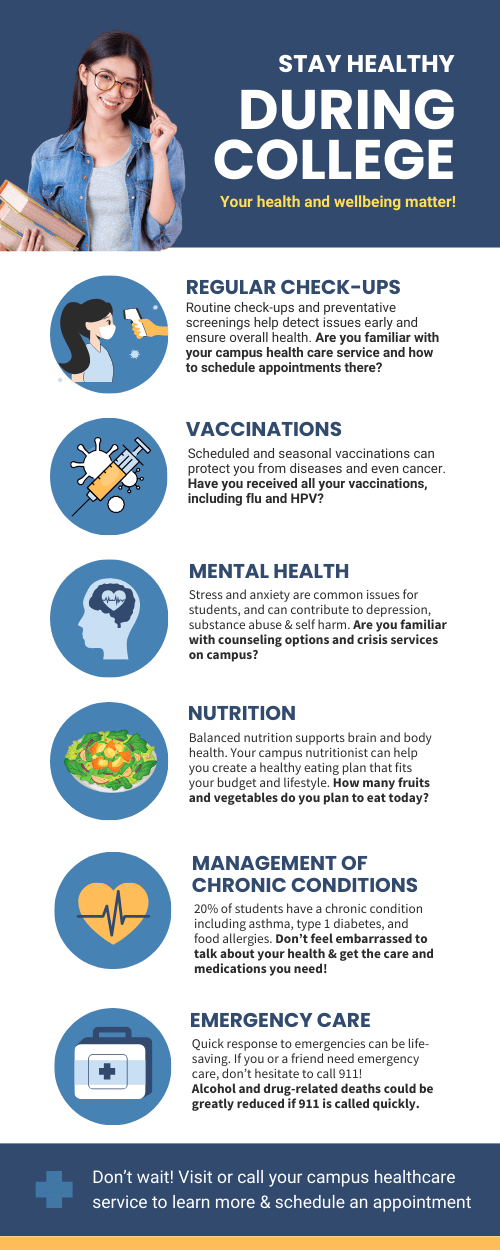
MCGUIRE'S HIERARCHY OF EFFECTS
This example for college health awareness used most of the 12-step process of McGuire’s Hierarchy of effects. This framework includes, clear messaging, maintaining audience attention, strongest points first, reasonably easy action, evidence for threats and benefits, perceived credibility, believable and realistic. appropriate tone/appeal and no harm.
-
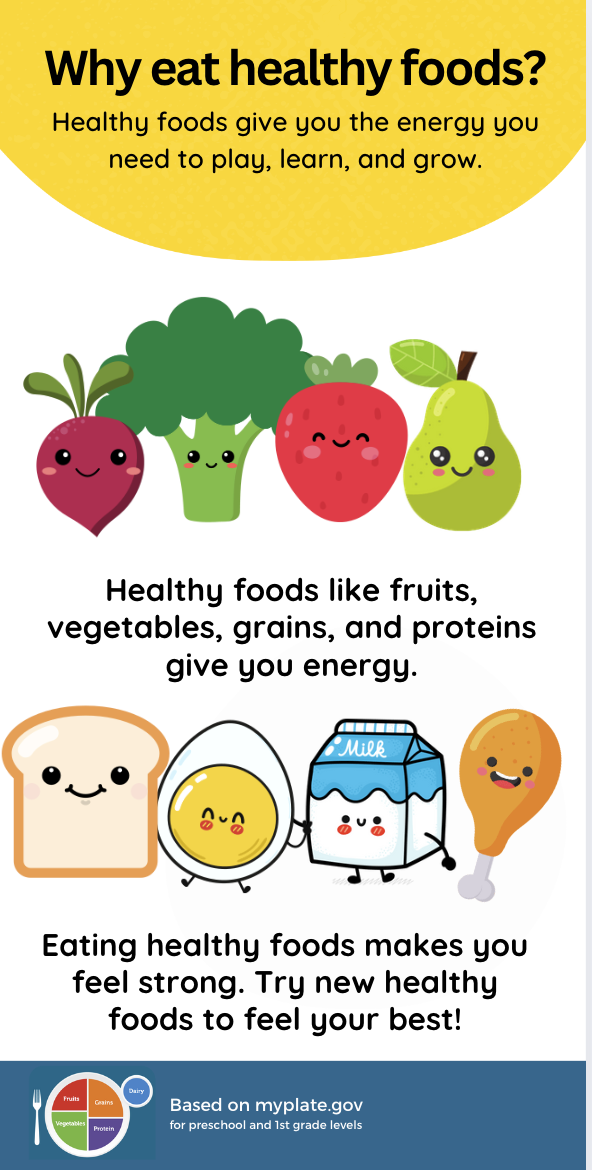
School Health Materials
This health initiative is focused on Nutrition Environment and Services, providing signage for classrooms and the cafeteria in an age appropriate manner for Pre-K to 2nd grade levels. This strategy introduces children to different types of healthy whole foods, and the concepts of both health literacy and self-efficacy. Through this approach, we start to reinforce the protective nature of proper nutrition, explaining that it will give energy to play, learn and grow. This is accomplished through the use of very simple language for early readers and friendly imagery of food items.
-
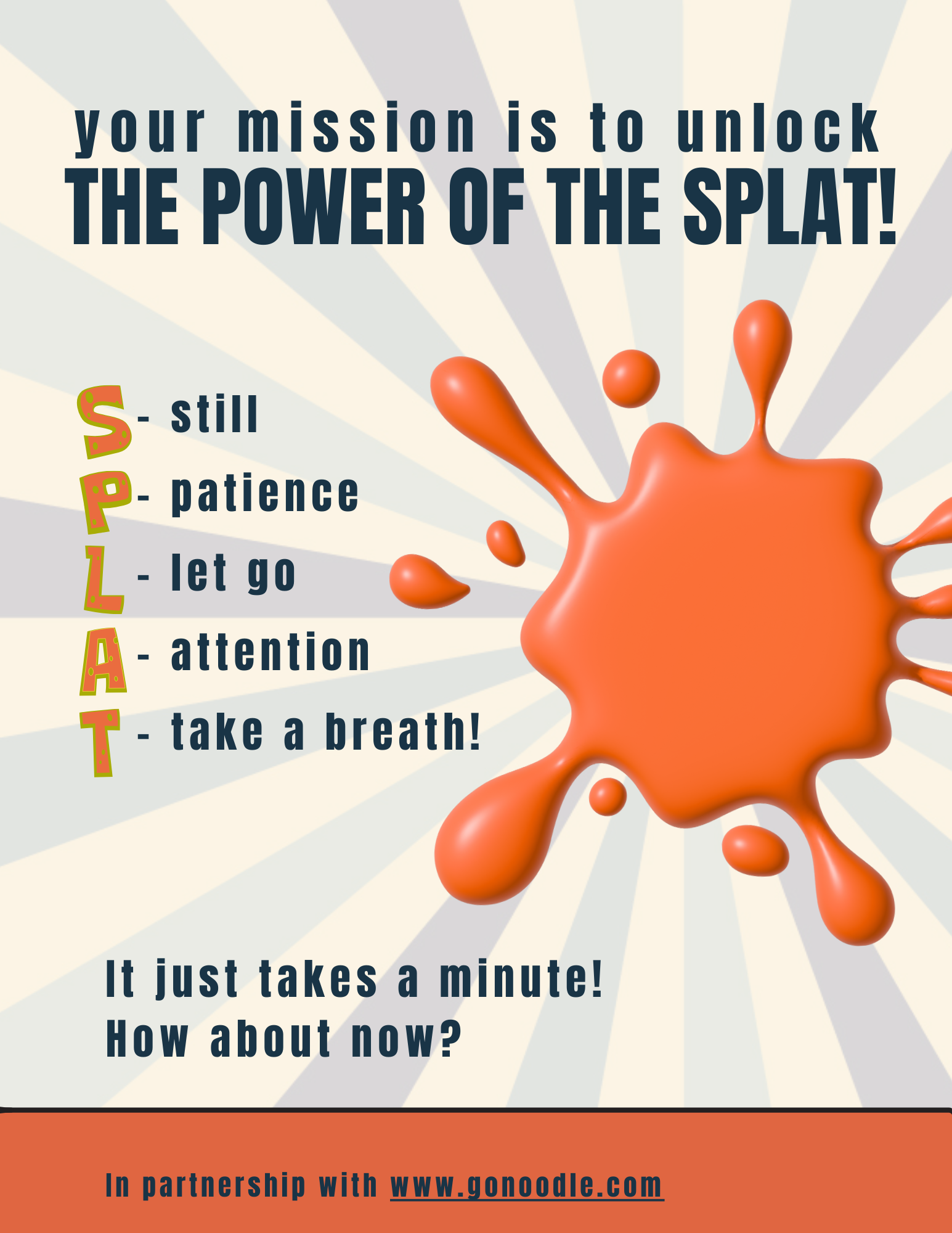
School Health Materials - Active Learning
For this initiative, we focus on active learning and skills-based education using the gonoodle.com website materials to engage 4th and 5th graders in brain breaks throughout the day. By incorporating “The Power of the Splat” video and accompanying downloadable worksheets in the classroom, teachers introduce mindfulness, emotional regulation, and de-escalation techniques to many potentially at-risk youth. These life skills can be normalized in children and tweens using fun imagery and popular television references.
-
Target Audience Segmentation
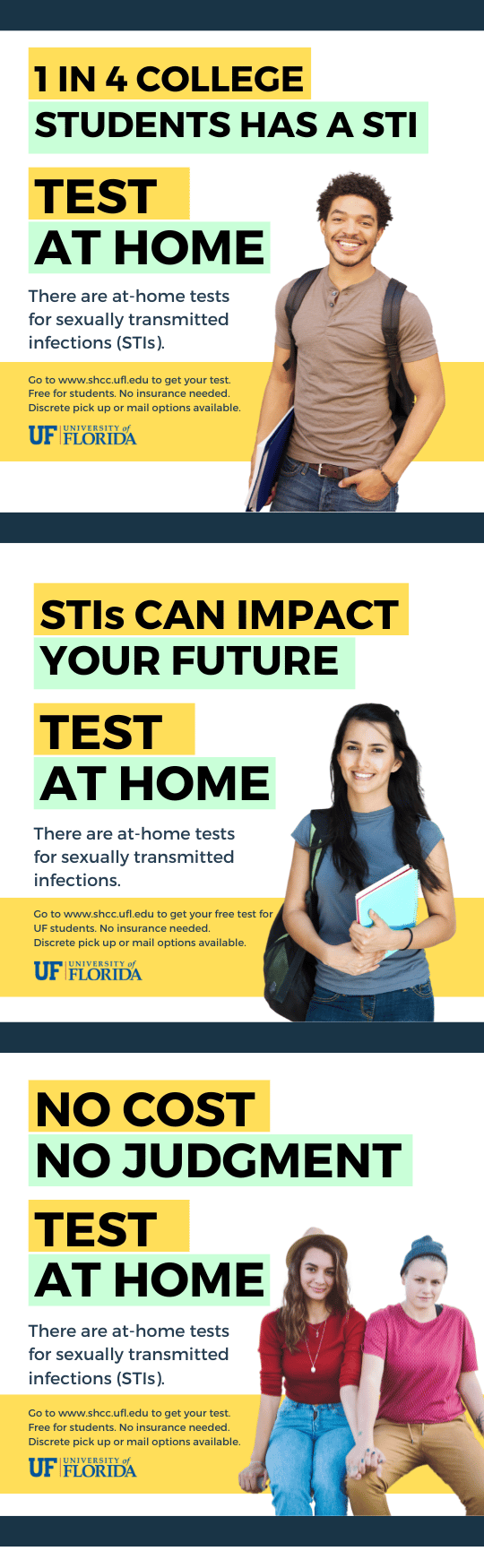
This communication campaign seeks to increase awareness and testing for sexually transmitted infections (STIs) among college students by addressing potential barriers such as stigma, cost, and accessibility of STI testing. Three Audience Segments were identified, including: heterosexual men, who often underestimates STI risks and
benefit from messaging on testing availability and confidentiality;
heterosexual women, who respond to messaging about preventive screening, long-term health, and the importance of testing; and LGBTQ+ students, who face higher risks for STIs and may encounter additional barriers like provider bias, stigma, and cost. -
Logic Model - U-Test: Take Control of Your Sexual Health
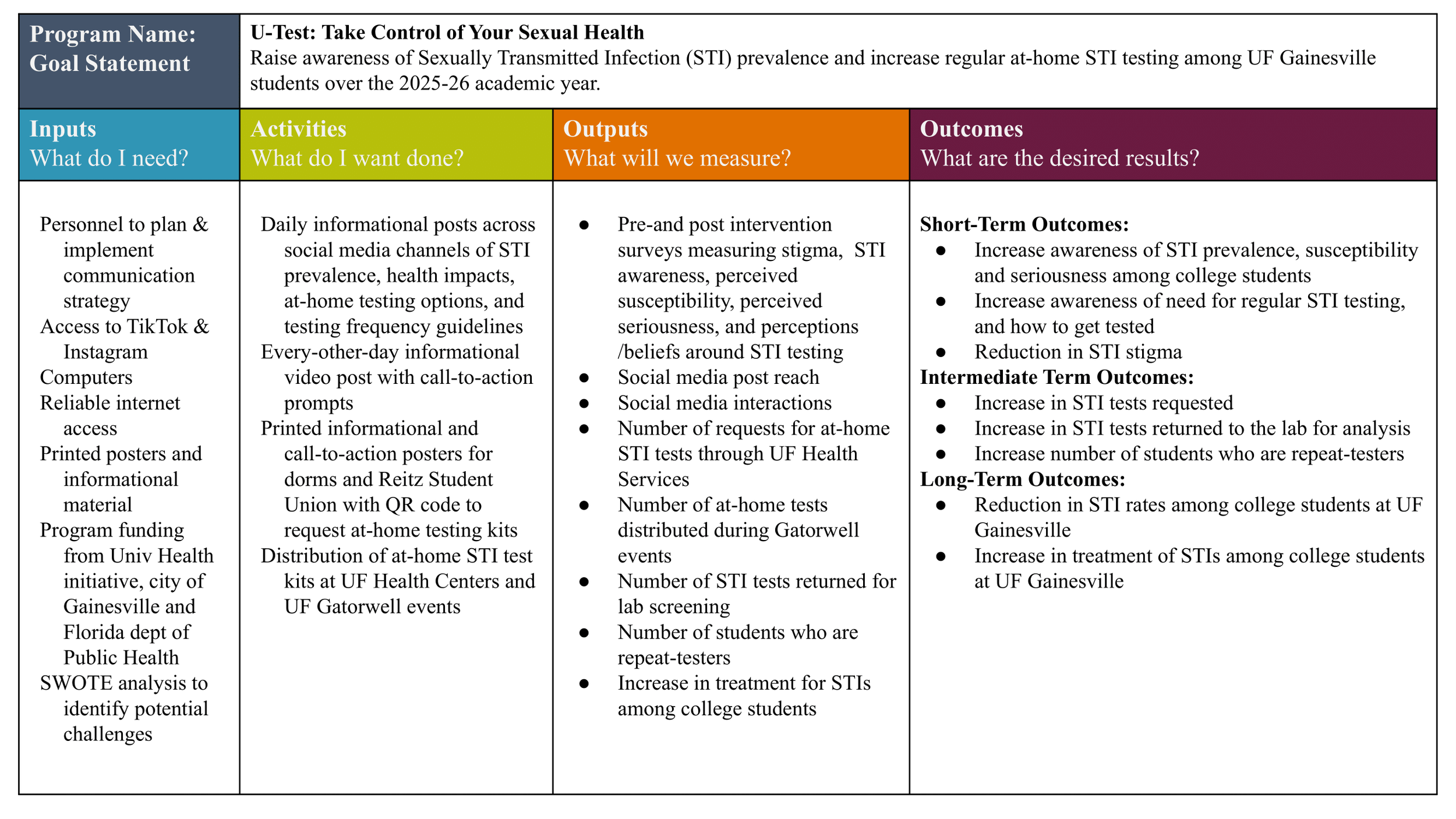
The U-Test at-home STI testing program is designed to raise awareness of Sexually Transmitted Infection (STI) prevalence and increase regular at-home STI testing among UF Gainesville students over the 2025-26 academic year. This logic model identifies the inputs (what is needed), activities (what will be done), outputs (what will be measured), and outcomes (desired results) for the program.